


Success Story SIEMENS
From zero visibility to 100% of intellectual services under control
“Before, it was all a bit of a blur. Today, thanks to OBMS, I analyse spend by supplier, by job role, by division. Frankly, it’s now a real pleasure.”
Clémence Périchon, Intellectual Services Buyer, Siemens
Siemens Mobility France in a few words
Siemens Mobility France has 750 employees across three sites (Lille, Toulouse, Paris) and works on strategic rail infrastructure and urban mobility projects: automation of the Paris metro (lines 1 and 14), rolling stock for airports and regional networks. Intellectual services account for nearly 50% of purchasing volume of the entity. It is strategic spend.
The challenge
On arriving, Roland Binder, Purchasing Director, found a structural problem: the price grids negotiated with 35 suppliers were scattered across Excel files. It was impossible to know whether orders complied with the negotiated prices. The data existed, but it could not be used.
The solution
Siemens France deployed OBMS in December 2024 across a scope of €30M of annual spend on engineering services, covering technical assistance, fixed-price and time-and-materials work.
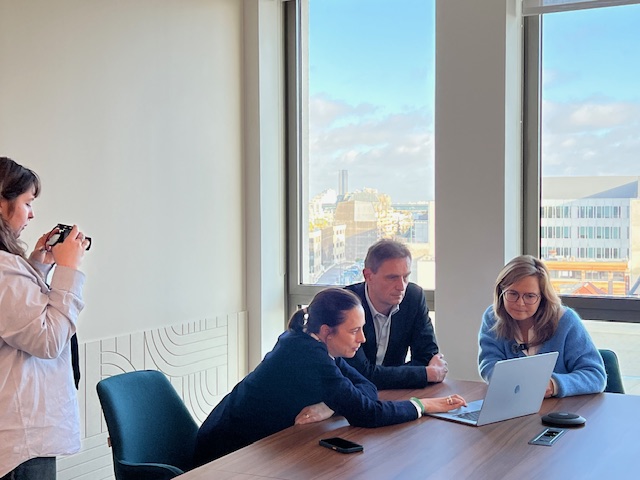
Watch the video testimonial
Roland Binder and Clémence Périchon look back on the challenges of managing intellectual services at Siemens and on the concrete impact of OBMS day to day.
€30M
of spend under control in less than 2 months
The end of the blur
Before OBMS, Clémence Périchon managed €30M of spend without being able to check whether orders complied with the negotiated prices. Supplier monitoring was limited to an overall volume, with no breakdown by job role, by division, or by quality of response to tenders.
“Today, thanks to OBMS, I am able to analyse spend by supplier, by type of job role, but also by division. Before, it was all a bit of a blur.”
— Clémence Périchon, Intellectual Services Buyer, Siemens
Data ready for the next referencing rounds and for use by AI
Siemens France is preparing its 2027-2028 referencing based on the data consolidated in OBMS: most-purchased profiles, suppliers systematically outside the grid, response history. What used to take weeks of manual consolidation can now be read in a few clicks, paving the way for AI-driven analysis.
“We can identify the suppliers who always invoice too much or who always make proposals above the grid. It lets us target the right suppliers better.”
— Roland Binder, Purchasing Director, Siemens Mobility France
100%
of purchasing volume in technical assistance and fixed-price services managed on OBMS

< 15 min
Guaranteed support response time

A partner, not just a software vendor
OPASE’s support does not stop at the initial training. Monthly strategic reviews, responsive operational support and co-construction of product developments: Roland Binder and Clémence Périchon describe a partnership that goes beyond a standard SaaS relationship.
“You are available all the time, you are responsive, there is nothing to complain about. That’s why we want to develop the module even further.”
— Clémence Périchon, Intellectual Services Buyer, Siemens
Roland Binder and Clémence Périchon answer
What does OBMS concretely bring you day to day?
Spend reporting by supplier and by type of job role is used constantly to analyse prices and check compliance with the productivity clauses negotiated in the framework contracts. For supplier business reviews, the OBMS fact sheets are downloaded directly and serve as support for the meetings — the data speaks for itself.
— Clémence Périchon, Intellectual Services Buyer, Siemens
Why did you choose to implement a VMS?
The price grids existed but were scattered across Excel files. It was impossible for requesters, buyers or suppliers to find the right price for the right profile at the right time. We needed a tool to structure the process, create transparency and make the data usable — particularly with a view to future analyses and AI.
— Roland Binder, Purchasing Director, Siemens Mobility France
What advice would you give for a successful VMS deployment?
Change management is the critical factor. Involving users from the needs-definition phase considerably improves acceptance. The rules of use must also be defined precisely before launch: what autonomy for requesters, and at what threshold purchasing steps in. After six to nine months, the feedback is very positive.
— Roland Binder, Purchasing Director, Siemens Mobility France
Is your company facing the same challenges?
Find out how OBMS transforms the management of your intellectual services: from spend transparency to preparing your referencing rounds.